'Films Don’t Go Wrong, Budgets Go Wrong': Filmmaker Siddharth P Malhotra Ahead Of 'Ikka'
· Free Press Journal
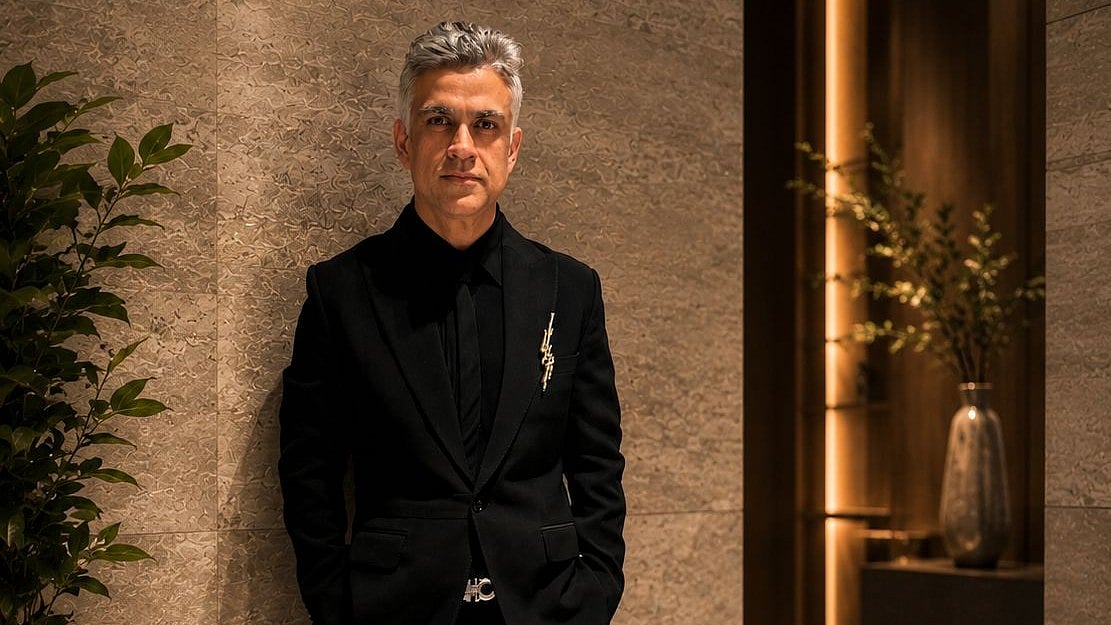
Filmmaker Siddharth P Malhotra was applauded recently for his epic film Maharaj starring Junaid Khan, Jaydeep Ahlawat and Sharvari Wagh.
Visit biznow.biz for more information.
One can’t but ignore the fact that he is not seen often in media or social media unless he is promoting a film. Despite a filmy lineage and Kapoor family connect, he never flaunts it. A ganda bandhan shagird of two classical stalwarts – Ustad Ghulam Mustafa Khan saab and Ustad Sultan Khan saab, directing films was not the first thought for Siddharth P Malhotra.
Ahead of his new film Ikka, Siddharth chats with The Free Pree Journal.
Excerpts from an interview:
When you produce and direct a film, which one dictates the other? As in does the producer barge in to stop the director from spending or the director shuts up the producer? How do you balance the two roles?
When you’re wearing both hats—producer and director—they don’t fight each other, they constantly keep each other in check. As a director, I know exactly what I need for every shot and every scene. I know which creative elements are absolutely non-negotiable because they’re essential to the storytelling, and I also know where I can adapt without diluting the vision. Cinema is always a balance between ambition and practicality.
The producer in me understands where every rupee is being spent and, more importantly, why it’s being spent. I’ve always believed that films don’t go wrong—budgets go wrong. It’s the moral responsibility of a director to respect the producer’s investment and ensure that the film is delivered within the agreed budget. Fortunately, I don’t have to do it alone. My wife, Sapna, is the producer, and we work as a team. There are conversations where I’ll tell her, “These are the scenes or elements I simply cannot compromise on.” If there’s pressure on the budget, we don’t compromise on the vision—we find solutions elsewhere. Maybe it’s another location, a different piece of equipment, a smarter schedule, or a more efficient way of executing the scene. The idea is to solve the problem creatively rather than emotionally.
Ultimately, filmmaking is about making a film that looks twice as expensive as what you’ve actually spent. That’s the real challenge, and when you’re able to achieve that, it’s not just the director’s victory or the producer’s victory—it’s the victory of the entire team.
Did you always want to be behind the camera? If yes, why?
I did, although I briefly toyed with the idea of acting. Like many people in cinema, I wondered if that was the path for me, but I realised very quickly that it wasn’t where I belonged. Music was actually a much more serious pursuit. I’m a trained singer under the tutelage of Ustad Ghulam Mustafa Khan saab and Ustad Sultan Khan saab, and I’m a gandabandh shagird of both. I even released an album with Universal Music. Music has always been a very important part of my life and continues to influence the way I tell stories. But if I’m being honest, I always felt most at home behind the camera. I genuinely enjoy bringing people together. As a producer and as a director, I believe one of my biggest strengths is working with people—finding the right talent, empowering writers, actors and technicians, and creating an environment where everyone can do their best work. A lot of that comes from the people I’ve learned from. I grew up watching my father lead with conviction and integrity, and I was fortunate to learn under my guru, Sooraj Barjatya. Then I assisted Karan Johar and later worked closely with Aditya Chopra. Watching these filmmakers wasn’t just about learning cinema—it was about learning leadership, collaboration and how to build institutions, not just films. That’s what excites me the most. Behind the camera, you have the opportunity to tell many different stories across genres and generations. You’re not limited to one character—you create entire worlds.
As an actor, you never say never. Maybe someday I’ll play a father or a supporting character if the right role comes along. But acting requires a completely different mindset.
Right now, my entire focus is on becoming a filmmaker and producer who leaves behind a body of work—a legacy of stories that people remember long after they’ve watched them. That’s the journey I’m committed to.
From a remake like We Are Family to a near biopic like Maharaj with a off the track Hitchki thrown in between, and now a thriller...as a director you have travelled the lengths n breadths... which is the nearest to your heart and why?
Every film I’ve made has a special place in my heart because each one came into my life at a very different stage, and each one taught me something different. Ikka is incredibly close to me because, interestingly, it was actually the first film I ever wanted to make—even before We Are Family. It took years to finally happen. It’s a full-blown commercial thriller, an emotional, edge-of-your-seat entertainer. I’m a third-generation Hindi film kid. My grandparents, Premnath and Bina Rai, my father Prem Kishen—I grew up on film sets and in cinema halls. I’ve lived and breathed Hindi cinema all my life. Ikka is, in many ways, a celebration of the kind of cinema I grew up loving: emotional, entertaining and completely paisa vasool. It’s about an ordinary man pushed into extraordinary circumstances who will go to any extent to protect his family. That’s the kind of story I love telling. We Are Family will always remain special because it was my first film as a director. It may not have achieved the box office numbers we had hoped for, but emotionally it’s a film I’ll always cherish. It gave me my beginning. Then came Hichki, and that film changed my life.
There was a point when I had almost convinced myself that if Hichki didn’t get made—or if it didn’t work—I probably wouldn’t direct another film again. I had gone through one of the darkest phases of my life, personally and professionally. I wanted to make a film that truly represented me, my beliefs and my voice as a storyteller. That’s why, if I had to choose just one, it would be Hichki. That film helped me discover who I am as a filmmaker.
Every director eventually develops a signature. When you watch a Sanjay Leela Bhansali film, a Karan Johar film or a Yash Chopra film, you instantly know whose film it is. The question I asked myself was: What makes a Siddharth Malhotra film? I realised it isn’t defined by genre. The genres can keep changing—that’s important to me because I never want to become repetitive. But the emotional DNA remains constant. A Siddharth Malhotra film will always place an ordinary human being in extraordinary circumstances. The characters will undergo profound emotional journeys. Human relationships, family, sincerity and emotional truth will always be at the centre of my storytelling, whether I’m making a thriller, a drama, a biopic or a commercial entertainer. I’m a deeply emotional person and a complete family man. I understand what makes people laugh, but I also understand what makes them cry. Those emotions naturally find their way into every story I tell.
So while the genre may change from film to film, I hope people eventually recognise the emotional fingerprint. That’s what I want a Siddharth Malhotra film to stand for.
You have made films for big screen and OTT platforms. What's the biggest difference that you have noticed - positive and negative? And how have you worked around the negatives?
For me, the biggest difference isn’t really the medium—it’s the mindset with which audiences consume it. When people walk into a cinema, they’re making a commitment. They’ve bought a ticket, travelled to the theatre and chosen to spend the next two or three hours with your film. As a filmmaker, that’s a privilege because you have their undivided attention. On OTT, you’re competing not just with other films or shows, but with everything. A notification, a phone call, social media, another series—anything can pull the audience away within seconds. So you have to earn their attention every single minute.
Having said that, I think today, just getting the opportunity to make a film or tell a story is a privilege. Every filmmaker understands that. But the challenges have definitely evolved. The biggest challenge on the theatrical side today is that films have become extremely difficult to greenlight. To make a film, especially at any meaningful scale, you need stars. To get stars, you need financing. To get financing, you often need a substantial portion of your budget secured through digital, satellite and other pre-sales before a studio is willing to commit. Today, 50 to 60 percent of a film often needs to be de-risked before cameras even start rolling.
So the negative isn’t creativity—it’s the economics of filmmaking. Whether it’s a large-budget film or even a modestly budgeted one, there are commercial realities that have to be addressed before a story can even be told. As a filmmaker and producer, you learn to work around that. You adapt. Sometimes it’s choosing a subject that’s commercially viable, sometimes it’s casting intelligently, sometimes it’s designing the film within a budget that still allows you to tell the story with conviction. It’s about finding solutions without compromising the soul of the film.
OTT has its own challenges. While it has democratised storytelling and allowed films to reach audiences across the world—Maharaj being a wonderful example of that—it is also an incredibly competitive space. There are only so many commissioning slots available, and the volume of content being pitched is enormous. Because of that, there is naturally pressure to tell stories in a way that’s immediately accessible and palatable for the platform and its audience. Sometimes that storytelling grammar is different from your own instinct as a filmmaker. The challenge is learning to adapt to the platform without losing your own voice.
I’ve never really changed my filmmaking depending on whether it’s for theatres or OTT. I still approach every project with the same sincerity and the same cinematic ambition. Whether someone watches my film on a 70-foot screen or on an iPad during a flight, I want them to feel the same emotions.
At the end of the day, platforms will keep evolving, business models will keep changing, but human emotions remain constant. If your story makes people laugh, cry, think and connect with your characters, it will find its audience—regardless of where it’s watched.
What's that one thing you have held on to that you learned from Vidhu Vinod Chopra? Why?
I was very fortunate to work with Vidhu Vinod Chopra at a very young age. I must have been around 15 or 16, and one of the first things he did was send me to Bandra station to learn typing because Movie Magic had just come out. That’s the kind of visionary he is. Even then, he was thinking ahead of everyone else, embracing technology and preparing his team for the future. What struck me most was that he was never just making films—he was constantly reinventing the process of filmmaking. To me, there is no filmmaker in our country who understands the language of the camera the way Vinod sir does. The way he moves the camera, uses technique to enhance emotion, and tells a story visually is simply extraordinary. He is an undisputed master of cinematic storytelling.
But beyond the craft, what I learned from him was conviction. Vinod sir believes in his films with every fibre of his being. He sleeps, eats, breathes and lives his script. He tells stories entirely on his own terms, with complete honesty and absolute commitment. Watching that taught me that if you’re making a film, you can’t be halfway in. You have to be willing to give it everything you have.
That’s probably the biggest lesson I’ve carried with me—that unwavering belief in your story. If you don’t believe in your film completely, no one else will.
The other thing I learned from him was leadership. I watched how he managed people, how he inspired his team, how he pushed everyone towards excellence without ever losing sight of the larger vision. Those lessons have stayed with me, not just as a director, but as a producer as well. So, whenever I’m making a film today, I often remind myself of that simple philosophy I learned from Vinod sir: give your story everything you’ve got. Hold nothing back. Because that level of conviction is what ultimately separates good films from unforgettable ones.
At 80, Kabir Bedi Says He's Busier Than EverWhat did your film lineage, as in family background, teach you?
The biggest lesson my film lineage has given me is very simple: never take failure to your heart and never let success go to your head. Growing up in a film family, I didn’t just witness the glamour of cinema—I witnessed the reality of it. I have seen incredible success, heartbreaking failures, passion, disappointment, resilience and reinvention, all from very close quarters. I saw it through my grandparents, my father, my extended family and generations of people who dedicated their lives to this industry. That gives you perspective very early in life.
Film lineage definitely gives you access. It gives you exposure, understanding and the privilege of learning from people who have walked the path before you. It may even open the first door of opportunity. But after that, your surname doesn’t direct your film, write your script or make audiences buy a ticket. In today’s world, I genuinely believe you’re only as good as your last piece of work. Whether you’re a director, an actor, a writer or a technician, if you’re not constantly evolving and giving more than your best, someone else will. This industry doesn’t stand still, and neither can you. So I’ve always looked at my lineage with gratitude, not entitlement.
I’m grateful for the experiences I’ve inherited because I have the advantage of learning not only from the successes of those before me, but also from their mistakes. That wisdom is invaluable. But I also remind myself every day that their journey was theirs. Their victories and setbacks belong to them. My responsibility is to create my own journey, earn my own place and justify every opportunity I get.
Today, making a film itself is a privilege. So I never want to take that privilege for granted. My endeavour is always to overdeliver—to push myself beyond what I think I’m capable of, to keep learning, to keep improving and to never become complacent.
The effort is mine; the result is God’s. That’s the philosophy I’ve inherited from my family, and it’s one I hope I never lose.
What was the biggest challenge while making Ikka?
The biggest challenge while making Ikka was finding the right balance—both creatively and emotionally. On the practical side, just getting everyone together under one roof was a challenge. We were working with people who were going through their own personal struggles and difficult phases in life—circumstances that were completely beyond anyone’s control. As a director, it was my responsibility to respect that, to be empathetic and to create an environment where people felt supported.
At the same time, filmmaking doesn’t stop. You still have a schedule to honour, scenes to complete and a film to deliver. So my job was to motivate the entire team, bring everyone together with a common purpose and ensure that when the camera rolled, we gave the story everything we had.
Ikka is a film I’ve lived with for over nine years. It was actually the first film I ever wanted to direct, so every beat, every scene and every emotional turn was already very clear in my mind. That clarity helped me navigate the challenges. Creatively, there were two things that were extremely important to me.
The first was to make the courtroom drama engaging. Courtroom films can easily become dialogue-heavy, so the challenge was to keep the storytelling taut, the pacing sharp and the audience constantly invested. I also wanted the performances to feel completely authentic and emotionally truthful, never melodramatic.
The second challenge was balancing my own voice as a filmmaker with the expectations that come with working with iconic stars like Sunny Deol and Akshaye Khanna. They have incredibly passionate audiences, and rightly so. People come into the theatre with certain expectations of seeing these legends on screen, and it’s important to honour that.
But at the same time, I didn’t want the film to become just a star vehicle. I wanted it to remain my film, told in my voice, with my emotional DNA intact. That was probably the biggest balancing act—to celebrate the superstardom of these actors while ensuring the story remained the true hero. When those two things come together, I believe that’s when cinema becomes really special.
So the biggest challenge wasn’t any one scene or one day of shooting. It was maintaining that balance every single day—between empathy and discipline, between scale and intimacy, between superstardom and storytelling, and ultimately between serving the audience while staying true to my own voice as a filmmaker.
What is that one thing you are looking for in your actress who will play Meena Kumari?
The one thing I’m looking for in the actress who will play Meena Kumari is complete surrender. Not to me, but to the script, to the character and to the extraordinary legacy of Meena ji. I don’t want an actor to approach this film thinking about market viability, release windows, box office projections or whether this is the right time for a period film. I don’t believe an actor should second-guess what audiences may or may not want. Audiences have always surprised us, and great performances have always found their place. What I want is an actor who comes in with absolute faith in the material and is willing to immerse herself completely in Meena Kumari’s world.
We’re not portraying just one chapter of her life—we’re covering almost two decades. In twenty years, every human being evolves, grows, breaks, heals and changes. Meena ji did too. So, the performance has to capture not just her appearance, but her emotional evolution, her vulnerability, her strength, her contradictions and the incredible soul that made her who she was. I want someone who respects that legacy enough to let go of herself and allow Meena ji to live through her. That’s where truly memorable performances come from—not imitation, but complete emotional surrender.
As a director, it’s my responsibility to take the actor on that journey. I will do the research, build the world, guide the performance and protect the character. What I need from the actor is trust. Trust the script, trust the process and trust the journey. The commercial aspects of filmmaking—budgets, recoveries, release strategies and box office—are important, but they’re a collective responsibility. They’re for the producer, the studio and the entire team to think about.
The actor’s responsibility is to deliver an honest, truthful and unforgettable performance. If I find someone who can surrender to the character with that kind of conviction and passion, I believe the rest will take care of itself.
What's the biggest challenge you think you would encounter or you have already encountered while making Meena Kumari biopic?
The first thing I’d like to clarify is that this isn’t a Meena Kumari biopic in the conventional sense. It’s a love story between Meena Kumari and Kamal Amrohi, told through their diaries and the deeply personal letters they wrote to each other. The film also gives immense importance to Kamal Amrohi’s first wife, Mehmoodi ji, who plays a pivotal role in the narrative. So this isn’t simply the story of one individual—it’s the story of relationships, love, sacrifice and the emotional complexities between three remarkable people. The biggest challenge we have encountered is actually not the storytelling—it’s bringing the film to life.
The story spans from the 1950s to the 1970s, which makes it a large-scale period film. Period films are expensive by nature because every frame has to recreate an era—from costumes and production design to locations and visual detailing.
The moment a film reaches that scale, it enters a different economic reality. To finance a film of that size, producers naturally look for recoveries. Recoveries often depend on casting stars, because stars help secure studio backing, digital rights, satellite rights and distribution. That’s simply the business of filmmaking today.
As a filmmaker, my first instinct is always to cast the actor who is absolutely right for the part. But as a producer, I also understand the financial realities. You have to find the balance between artistic integrity and commercial viability.
The biggest challenge I’ve encountered is that almost everyone today is trying to second-guess what audiences want. Even when people genuinely love the script, the conversations often become about timing, market conditions, commercial viability, recoveries and whether audiences will come to theatres. My belief has always been much simpler.
Audiences don’t reject honest storytelling. They respond to sincerity. If you make a good film with conviction, emotional truth and honesty, audiences will embrace it. History has shown us that time and again. Sometimes, I feel we in the industry spend too much time trying to predict audience behaviour instead of focusing on making the best possible film.
Today, we have a script that I truly believe in. The challenge now is finding the right cast—actors who are right for these extraordinary characters and who also enable the film to be mounted at the scale it deserves. Once we land that balance between casting and costing, I believe we’ll be able to tell a timeless love story in the way it deserves to be told.
Filmmaker Aditya Sarpotdar Carries His Family’s 100-Year Film Legacy Into A New Era Of StorytellingWhich is that one film/one role that you would have loved to direct your grandfather in? Old film or one of your own film where you would have loved to cast him in as...
If I had the opportunity to direct my grandfather, there are so many of his performances that I absolutely admire. I loved him in Barsaat, Aan, Bobby, Teesri Manzil and Dharmatma. Those films showcase different facets of his personality and screen presence, and I still enjoy watching them today. But if I had to choose one role that I would have loved to direct him in, it would actually be from a film I’m developing myself.
I own the official adaptation rights to the Academy Award-winning film The Father, and it’s a project I will soon be producing. If my grandfather were with us today, there is no question in my mind that I would have wanted him to play the role made iconic by Anthony Hopkins.
It’s a character of extraordinary emotional depth, vulnerability and dignity—qualities my grandfather possessed not only as an actor but also as a human being. He had this incredible ability to command the screen while conveying immense sensitivity, and I genuinely believe he would have brought something unique and unforgettable to that part.
For me, directing him in that role would have been more than making a film. It would have been an opportunity to preserve his brilliance for another generation and to collaborate with someone whose work inspired me long before I ever became a filmmaker. I think that would have been a dream fulfilled.