From Zingara waiter hopeful to Primadonna
· Citizen
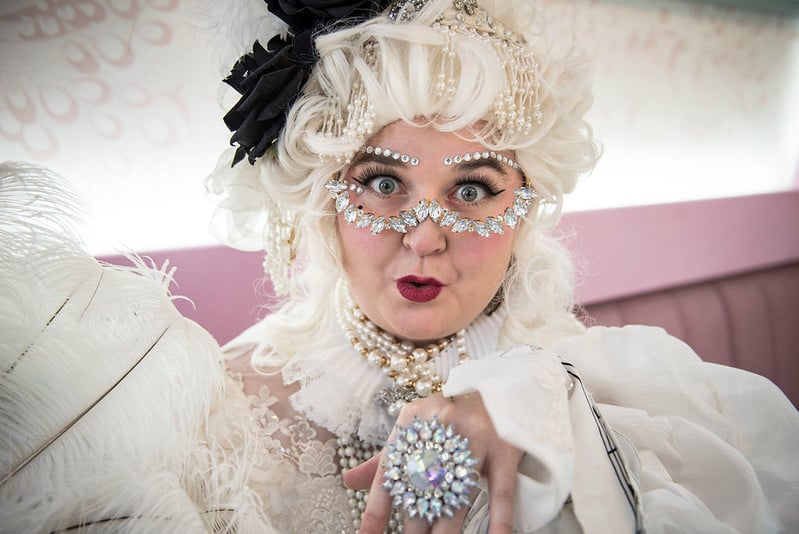
It’s not every day that anyone gets to have a cup of coffee with Marie Antoinette.
Visit grenadier.co.za for more information.
Megan Spencer, aka Primadonna in The Countess Zingara, is larger than life off stage, too.
Not only is her voice pegged somewhere around the height of Mount Everest, but her personality fills a room, and her talent any stage.
It’s hard to believe that Zingara is her first major theatre role requiring the kind of vocal gymnastics audiences hear every night.
The voice-over artist, musical performer and actress wasn’t even supposed to be in the show. She applied to be a waiter.
“My agent sent me for a waiter audition, and the director said, ‘What are you doing here?’ I said instead, ‘I am here to sing.’ He said, ‘You know what, just sing for me.’ And I sang a song from Candide, and he went, ‘That’s it, you are in. We’ll make a place for you.'”
Probably for the best, she admitted. “I am not a good waiter. A bit clumsy.”
Waiter audition led to lead role
The voice that got her the part defies logic. One moment, she chats away like anyone else; the next, she soars into a register that, in opera terms, makes her a coloratura. Except she has never studied opera, nor had a single classical lesson.
“I was literally born that way. This is honestly a natural talent that I have monetised,” she said.
Let them eat.. Nicole’s Macaroons in Melrose Arch. Picture: Michele Bega / The CitizenThe nearest thing to an explanation came from her dentist, who discovered her mouth and jaw are so small that he had to create canals to remove her wisdom teeth.
“The vocal folds are incredibly tiny and can move quickly. So, it’s not a lot of work. Isn’t that weird?”
She discovered the gift by accident at around eighteen, hearing high notes and simply mimicking them. It later became her bread and butter as a voiceover artist, right down to children’s voices for cartoons. She failed music at college, can read it at about a grade two level, and laughed the whole thing off.
Spencer has an easy laugh and doesn’t take herself too seriously, but beneath the humour sits someone who trusts her instincts completely.
She isn’t interested in plotting where she’ll be in ten years. She simply says yes when something feels right.
When something feels right, it’s a yes!
On stage at Zingara, almost nothing she does is written down.
Her opening number is not the Flower Duet in Italian, as some audience members may think, but a song in an invented Zingari language that she makes up as she goes along.
As the show’s weeping woman in another scene, she improvises notes and emotion from whatever unfolds in front of her.
“Every night is different. That’s how I can do it every single night, because it’s a brand new experience.”
Her instrument demands discipline, though. She neither smokes nor drinks, because by morning the folds are inflamed and the high notes gone.
A day of screaming on Gold Reef City’s roller coasters recently landed her on vocal rest.
Superbly talented and a nice person to boot. Picture: Michele Bega/ The CitizenWhat came as quite a surprise is that, apart from her father, a self-taught guitarist, music and vocal gymnastics don’t run in her family.
She barely cried as a baby, according to her mom, as if saving her voice for later.
She added that, instead, she comes from generations of women who lived and worked in the platteland.
Later in life, drama school happened on a dare, when a friend nudged her to audition at the Waterfront Theatre College. She got in and stayed for four years.
She has never flipped a coin over a decision.
“I make it then and there on the spot. I know exactly what I should do.”
Big role ahead
When her Zingara run ends, the biggest musical theatre role of her career to date awaits, but she said it’s still hush-hush.
“It’s not a lead, but to me, it’s the character I want to play because of the latitude the role offers me.”
Back on stage at Zingara, she often sneaks a look at the audience when the big notes fill the Big Top.
“Most of the time, they are shocked or frightened. Then confusion, and then awe,” she said. She still struggles with applause. “I see it as an acknowledgement that I did my job.”