Chris Wickham Revolutionized Our View of the Middle Ages
· Jacobin
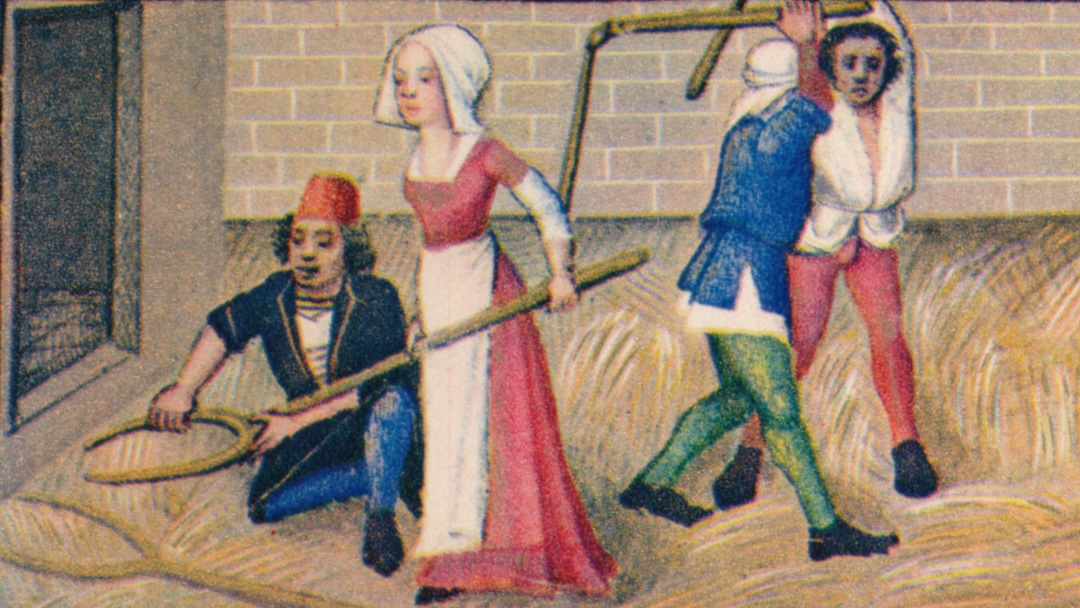
With the passing of Chris Wickham earlier this month, we have lost the greatest medieval historian since Marc Bloch, and one of the most original Marxist historians ever. In his career, which spanned half a century, Wickham wrote more than twenty books and two hundred articles. In these works, he showed how the social and economic structures of Europe and the Mediterranean transformed in the period from 500 to 1500.Key factors in his analysis were the rise and fall of the state, the political and economic role of the landowning elites, and the protagonism of the peasants. His massive intellectual production revolutionized not only our idea of the Middle Ages but above all our understanding of how societies function and change across time.Formative YearsChris Wickham was born on May 18, 1950, into a middle-class family in the Welsh village of Rossett. He attended a private school in Somerset, England, before beginning his studies at the University of Oxford in 1968, from which he graduated in 1971. During these years, he frequently traveled to Italy, becoming familiar with its early medieval landscape.When he decided to undertake postgraduate research at Oxford, Wickham departed from the themes that were predominant at that time in British medieval studies, such as Anglo-Saxon England and Carolingian France. He focused instead on early medieval Italy with a thesis titled “Economy and Society in Eighth-Century Northern Tuscany,” which he completed in 1975.After his PhD, he continued to teach at Oxford, traveling from time to time to Italy, where he started to participate in excavations with eminent archaeologists such as as Graeme Barker, Riccardo Francovich, and Richard Hodges. Fieldwork in Italy was certainly one of the experiences that shaped his approach to history for the rest of his life.A second turning point in his career was his move to the University of Birmingham in 1977. Although this university no longer reflected the working-class lifeblood of the pre–World War II town, Birmingham still had a far greater number of students from middle-class and working-class backgrounds than Oxford and Cambridge did in the 1970s and ’80s.Rodney Hilton, the most renowned historian of the medieval English peasantry, also taught there. Hilton belonged to the group of British Marxist historians that included such figures as E. P. Thompson, Christopher Hill, and Eric Hobsbawm. Their work shaped the emergence of history from below from the 1950s onward.Hilton had an enormous intellectual influence on Wickham as well as on other young scholars, like the Byzantine historian John Haldon and the social scientist Gregor McLennan. They were all involved in politics, and Haldon and Wickham both joined the Communist Party of Great Britain (CPGB). Hilton had also been a party member before he resigned in 1956 after the Soviet invasion of Hungary. By the 1970s, the CPGB was rather more critical of the USSR and had condemned the invasion of Czechoslovakia in 1968.Given his ties to Italy, Wickham also became a member of the much larger Italian Communist Party, which he saw as a model because of its history and ideas. Unfortunately, the effort of this small group of historians and militants to push the CPGB toward a Eurocommunist trajectory failed, and they all left the party before the end of the 1980s.In our numerous conversations, Haldon very fondly recalled the meetings at Hilton’s house where the junior participants presented their Marxist interpretations of history to their severe but open-minded host. Hilton’s circle was a true laboratory of ideas in the 1980s.The Making of a Marxist HistorianIn this cultural milieu, Wickham began to revise the dogmatic Marxist approach to medieval history that was still predominant at that time. In two seminal essays published in 1984 (“The Other Transition”) and in 1985 (“The Uniqueness of the East”), Wickham rejected the idea that a contrast between slavery and serfdom marked the transition from the ancient to the medieval world. Instead, he argued that these two historical periods had different political and economic organizations that he called “tributary” and “feudal” modes of production.In the tributary regime, power was concentrated strongly in the hands of a ruling elite at the top of the political system. Tributary political structures ultimately depended on their capacity to extract sufficient revenues from the agricultural population to fund their centralized machinery of power, such as a court, a bureaucracy, and a salaried army. In feudal societies, in contrast, the means of coercion were in the hands of local landholding elites, with a fragile structure of rule at the top. The crucial factor for exercising power in such political formations was the direct ownership and control of the land.Wickham also argued that when landlords or the state were not able to appropriate the surplus from the peasantry in a systematic way, an economic organization that he called the “peasant mode of production” became predominant. We can find several examples of such peasant economies in Europe and the Western Mediterranean from the sixth to the eighth centuries. He labeled the period between the fall of Rome and the rise of the Carolingian Empire as a sort of “golden age of the peasantry.”In the following years, Wickham demonstrated his ability as an unorthodox and open-minded Marxist historian by refining his interpretation on the basis of theoretical dialogue with other scholars as well as the results of his fieldwork. We can find evidence of his intellectual achievements in two monumental volumes written eighteen years apart: Framing the Early Middle Ages: Europe and the Mediterranean, 400–800 (2005) and The Donkey and the Boat: Reinterpreting the Mediterranean Economy, 950–1180 (2023).In these works, Wickham rewrote the economic and social history of the Middle Ages, overturning some interpretative paradigms of past historiography, including his own original conception of “modes of production.” He made clear that his reinterpretation of the transitions from one historical period to another was deeply influenced by the theoretical reflections of two members of the Birmingham historical materialism group: John Haldon and the Turkish historian Halil Berktay.In his new formulation, Wickham used the concept of modes of production exclusively to mark the passage from a preindustrial economic logic to that of capitalism. From this perspective, categories like tributary, feudal, or peasant no longer identified a given mode of production in the traditional Marxist sense. Instead, they referred to specific configurations of the societies predating the advent of capitalism.Wickham’s Long Vision of HistoryExpanding on this new interpretation, Wickham argued that three major cycles — ancient, medieval, and modern — have framed the economic configuration of Western Eurasia and Africa in the last two millennia. Beginning from a unified Mediterranean in the second century BCE under Roman expansion, the ancient trade cycle peaked in the imperial period (first to fourth centuries CE).From that point, it began its decline in Western Europe around 500: at the same time, the Eastern Mediterranean kept flourishing for at least two centuries, until the collapse of the Eastern Roman Empire led to the fragmentation of the Mediterranean economic space. The second Mediterranean trade cycle emerged around 900 in southern and central Mediterranean regions such as Egypt, North Africa, and Sicily. The localization of Mediterranean economic life led to slow but steady growth over the following two centuries, expanding to encompass northern and central Italy in the twelfth century.The differences between the ancient and medieval periods lie in the varying interventions of the state and landowning elites in the peasant economy: on the one hand, tax-raising by states; on the other, rent-taking by landlords. Their points of convergence “lie in the fact that, in both types of society, the peasant majority controlled the basic production process.” The state and the elites created infrastructures of exchange, but the access of peasants to larger surpluses and, consequently, the market for food and handcrafted goods made it possible for production and commerce to significantly increase.This means that the scale of production, circulation, and consumption of bulk commodities generated by peasant demand was the most obvious proxy for the level of economic sophistication that ancient and medieval structures attained. Luxury goods historically entered the market only in response to the purchasing power of quantitatively limited elites. In this framework, “states and landlords could affect the production process by demanding different types of taxes or rents, thus curtailing the levels of commercialization of the peasant surpluses. However, they did not have a structural role in production, nor did they exercise forms of direct control over it.”The start of the third economic cycle on the eve of the modern era saw the economy reorienting itself toward the Atlantic — a factor that historians have typically interpreted as the end of the medieval economy. The trade ties between Europe and the rest of the world greatly expanded in this new economic cycle, bringing with them new types of exploitation. According to Wickham, this final cycle, which gave rise to capitalism, deviated from the economic rationale of the other eras.It was only at this historical juncture that peasants ultimately lost control of production and were forced to relocate to cities or factory towns, where they struggled to survive as proletarians completely exposed to the fluctuations of the market: “Under capitalism, in fact, capitalists dominate the labor process directly, and the exploitation involved is hidden by the apparently free nature of the wage-labor contract.”From Peasants to the World EconomyAs a historian of the Middle Ages, Wickham was capable of moving from the minute study of local societies to the macroeconomic factors that shaped the world economy in premodern times. After his dissertation on Tuscan rural societies, he continued his research on Italian rural communities, from the countryside surrounding Lucca to the remote areas of Valva and the Biferno Valley in the central Apennines (Studi sulla società degli Appennini nell’Alto Medioevo, 1982; Il problema dell’incastellamento nell’Italia centrale, 1985; The Mountains and the City, 1988).In these studies, he examined every aspect of people’s lives: How did peasants behave toward local authority figures, from the bishop or the aristocracy to the landlords? What strategies of negotiation or resistance did they undertake in court or on the ground to resist their powerful counterparts? Where did they live, and what did they produce and eat? What did they exchange, and under which conditions did this trade occur?In essence, the key question Wickham asked in his research was why the society he was investigating worked in the way that it did. To answer this question, he moved to explore comparable communities in the Mediterranean and Europe, from the villages of Aphrodito and Jeme in central and Upper Egypt to those of central Anatolia, and from the interior of the Iberian Peninsula to the large plateau of the Île-de-France.In Framing, he also invented a village, which he called Malling, to describe the archetypal rural community of Anglo-Saxon England. In a 2017 article, Wickham expanded his range of case studies enormously, even comparing Northern Italy and the Jiangnan region of China from the tenth to thirteenth centuries. As in his previous studies, Wickham concentrates on the structures of production and consumption of these two “highly complex economies by the standards of the period.” As he explains, no matter how global we want to be, “most of the economic interaction lay at local and regional levels.”The recurrent theme through all these studies was the question of how a small minority of people loosely defined as elite managed to appropriate and channel the wealth produced by the rest of the population — the 90 percent addressed in the work of Kim Bowes — while transforming (or failing to transform) the peasant economy from a local to a global-oriented structure.LegacyIn a fascinating interview from 2022 with historians Charles West and Maria Elena Cortese, Wickham revealed that during his formative period at Oxford, he never had someone whom he considered his mentor. He built his scholarship through a massive and at times disordered reading of diverse literature and by exchanging ideas with his peers.His intellectual formation was the result of a lateral collaboration between students of history rather than a vertical transfer of knowledge from a senior to a junior scholar. Wickham pursued this strategy even in the later stages of his career by participating in collaborative projects in which everybody was welcome to offer their contribution. For this reason, perhaps, Wickham never created a proper school in the traditional academic sense: a group of scholars who can be recognized as his students.That said, he had an enormous impact on the way many of us write about history. A small group — including myself — embraced his Marxist approach to history, even though, in keeping with the leftist tradition, we never agreed on a single Marxist interpretation (Chris was glad of this variety). The majority appreciated his rigorous methodology, his ability to combine history, archaeology, and anthropology, and his deep familiarity with the scholarly tradition of each country he interacted with, through his research and through his personal and intellectual relations.But the human factor made the true difference. Since he could not change the world the way he wanted, he introduced a sort of intellectual socialism in the academic world. We did not all have (or want to have) a master to follow, and we could not all go to Oxford to learn history, but we all had the chance to share our ideas with Chris Wickham: he was always there offering advice, comments, or criticisms.Chris has left us an enormous legacy, a gift I like to call, paraphrasing the historian Giovanni Levi, “immaterial inheritance”: a rich and polyhedric constellation of methods, questions, and ideas that have fostered — and will indubitably keep fostering — deeply meaningful academic connections.This article originally appeared in Jacobin, a democratic socialist magazine publishing long-form essays and analysis on politics, economics, and culture. Subscribe to the print edition for $20 a year.
Visit syntagm.co.za for more information.