A Chief of Staff Who ‘Will Crack Skulls’
· The Atlantic
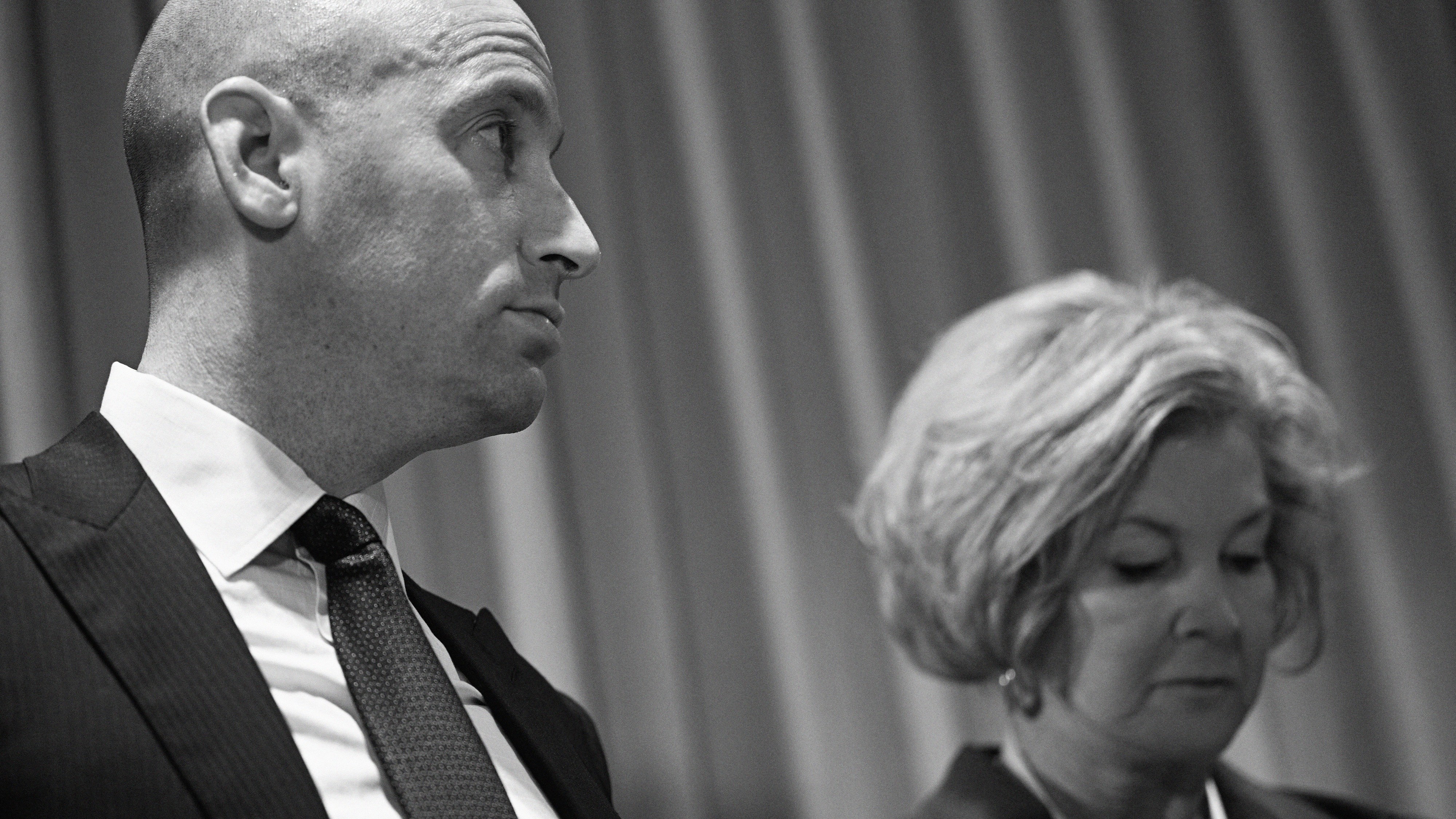
In the days before MAGA’s midterm disaster, President Trump began complaining about his presidency. He felt stuck. The war in Iran wouldn’t end. Inflation wouldn’t subside. Little was going his way. But in the president’s mind, there was one exception: “Stephen is the only one who gets stuff done,” Trump repeatedly griped, a person close to the White House told us. “I need more people who get stuff done.”
Visit playerbros.org for more information.
Stephen Miller, one of the president’s hardest-charging and longest-serving aides, had managed to maintain Trump’s trust, even though he is the architect of the administration’s sweeping mass-deportation campaign that many in the GOP blame, in part, for the Republicans’ historic wipeout this week. Today, Trump announced that Miller would replace Chief of Staff Susie Wiles, completing his decade-long journey from congressional staffer to the most powerful aide in Washington.
Where Wiles served as something of a guardrail—making sure Trump was fully briefed and that he understood the risks and pitfalls of any decision—Miller has played the role of an accelerant for a president who already has rash tendencies. One issue on which Wiles and Miller seem to diverge: how to force journalists to reveal their sources in the government. Trump has pushed the Department of Justice to pursue criminal-leak investigations on national-security grounds, and there have been discussions in the White House and at DOJ about various tactics they could use—including arrests—as part of those efforts, according to three people familiar with the matter. Two of those people said that Wiles had pushed back. Miller, though, was in favor and insisted that it wouldn’t take long for journalists to give up their sources, they told us. A DOJ spokesperson told us via text that “this is absolutely false” but declined to elaborate. A White House spokesperson told us in a statement that unauthorized leaks will “NEVER be tolerated” and those responsible “must be held accountable.”
One person familiar with Trump’s decision to elevate Miller told us that the president wants somebody who “will crack skulls,” adding that Trump “doesn’t want to be reined in.” Another described Miller as someone with significant Capitol Hill experience who could manage the coming clashes with Democrats. White House officials have held high-level conversations in recent days, including with Miller, about areas where they can work with Democrats. But another person familiar with Trump’s thinking said there was no need for a chief of staff who could work the Hill to pass legislation, because nothing was going to get done. “The next two years are going to be nonstop political warfare,” this person told us—and Miller can be the face of that fight.
This account of Wiles’s ouster and Miller’s ascent is based on interviews with six people familiar with the situation, all of whom spoke on the condition of anonymity to describe private conversations. Inside the White House, officials understood that Trump would never blame himself for Republican midterm losses, and the West Wing has spent the past few days wondering whom Trump would punish. When The New York Times published a story about the defeat—with verbatim leaks of Trump’s top political team joking ahead of the election about how grim it all looked—Wiles found herself taking heat from the president. Two people familiar with the matter told us that Trump felt that the story, which featured Wiles’s allies seeming to laugh at Republican failure, was a betrayal, and he expressed his displeasure to her.
Trump met with Wiles on Wednesday, and she volunteered to resign, but no decision was made. By yesterday, Wiles was telling her deputies that she had a resignation letter ready and was prepared to leave. She had spent months running the White House while undergoing treatment for breast cancer, and has described herself as “tired” to colleagues. The president announced her departure today after the Times reached out to the White House about her rumored exit. Wiles did not view her role as a roadblock to Trump’s most extreme impulses. On many of the White House’s most consequential decisions, she did not directly weigh in. During the debate over the Iran war, for instance, advisers said, she focused on making sure that Trump was fully briefed on the risks, although others in the White House described her as concerned.
Her replacement, who takes over on Monday, is known both for his effectiveness and his hard-line views. Miller appeared with Trump tonight at an event at Mar-a-Lago and said: “I pledge to you, Mr. President, my absolute loyalty, my unwavering commitment, and my total devotion to your success and the success of this country.”
Miller has been with Trump from the beginning. He was an aide to Senator Jeff Sessions of Alabama, who became the first senator to endorse Trump’s 2016 campaign. Before long, Miller was designing policy proposals—particularly those that reflected his hard-line immigration views—and sometimes appearing as a fiery warm-up act at Trump’s rallies. He co-authored the first term’s so-called Muslim ban, became known for his high-volume and belligerent TV interviews defending Trump, and was one of the few staffers to navigate the often-competing power centers in the dysfunctional West Wing. (In both terms, he has remained well liked by colleagues, who appreciate his straightforwardness and dry sense of humor.) Miller oversaw the writing of the speech that Trump delivered from the Ellipse on January 6, 2021, ahead of the Capitol insurrection, and his influence only grew during Trump’s four years out of power. Miller used that time to help write Project 2025, a playbook for Trump’s return to the White House that included a broad expansion of executive power.
At the core of Miller’s agenda was a sweeping deportation program. Masked ICE agents detained people in quiet neighborhoods and Home Depot parking lots, while Miller demanded that dramatic deportation quotas be met. Americans, polling showed, began to view the tactics as extreme, particularly after the killing of two Americans in Minneapolis early this year. Trump’s political team has privately blamed Miller’s aggressive immigration policy in part for the defeat on Tuesday, because violent ICE clashes and ethnic profiling on the streets have alienated both Latino voters and moderate independents.
Miller has already been operating as a de facto chief of staff for the Department of Homeland Security and the president’s mass-deportation campaign. He hosts conference calls six days a week with top officials from agencies across the government who are enlisted to help ICE with the crackdown. Officials who participate in the calls say that Miller often berates staff who disappoint him or lack the information he wants. The White House press office promised in a statement tonight that Miller “will continue to deliver historic successes for the American people.”
[Read: The simple message that produced a Democratic landslide]
Recently, Trump had begun telling people close to him that he was considering changing his immigration emphasis, recognizing that although voters supported his tough border-security stance, ICE’s brutal approach to rounding up undocumented immigrants, including those who are not criminals, was provoking a backlash. Trump had begun to hear from business owners about their employees being deported, along with the nannies and tutors of friends, and he was open to pivoting. Miller, as his chief of staff, will now directly oversee the policy debate, a shift from his role as the resident immigration hawk in the White House.
Since 2021, Wiles has been responsible for building the political campaign—and, later, the White House structure—around Trump. After January 6, at a time when most Republicans were keeping their distance from Trump, she offered him a core group of advisers, bringing in the veteran campaign strategist Chris LaCivita to help run the 2024 campaign, along with the strategists Taylor Budowich and James Blair, operatives with Florida political experience who would go on to senior roles in the White House. (Miller during this period operated outside the president’s inner circle, from a new legal operation focused on pursuing MAGA priorities.) Inside the White House, she was known for her calm and organization, and her ability to do what no other chief of staff to Trump had ever done: Guide the sometimes-mercurial president, regularly stepping in to try to prevent risky decisions, while at the same time allowing him to run his presidency on his own terms.
Wiles was well liked by many Republicans who appreciated the degree of levelheadedness she brought to the West Wing. She grew up as the daughter of an alcoholic, the football play-by-play caller Pat Summerall. Trump does not drink, but in an interview with Vanity Fair in 2025, Wiles said there were similarities between her father and the president, who she said had an “alcoholic’s personality,” and that had helped her in the job. But she slowed down this year. In March, shortly after the conflict with Iran began, she was diagnosed with breast cancer, forcing her to spend much of the campaign season juggling one of the most demanding jobs in government with regular chemotherapy appointments. She described the ordeal as “brutal and unrelenting,” and said that she sometimes had to fight to get out of bed. Trump’s poll numbers collapsed, largely because of high prices fueled by the war and his haphazard tariffs program.
Wiles had built a team of loyalists—to both her and the president—in the White House and steered the West Wing to a series of successes last year, including passing its signature piece of legislation, the One Big Beautiful Bill Act. At the start of the term, White House advisers, including Wiles, took steps to turn the broad coalition that had elected Trump into regular Republican voters.
Wiles never stopped the president from relying on other advisers as well—both in and outside the administration. In recent weeks, some of those advisers became more crucial. Corey Lewandowski, who clashed with Wiles during the 2024 campaign, shared a social-media post after the election blaming Republican “political consultants” for giving “really bad advice.” And just hours before Trump announced Wiles’s departure, a former deputy to Health Secretary Robert F. Kennedy Jr., Calley Means, appeared on Joe Rogan’s podcast and accused the chief of staff of standing in the way of the Make America Healthy Again agenda by siding with pesticide, tobacco, and food-industry concerns during policy debates.
[Read: The White House’s MAHA gatekeeper]
Other powerful forces in Trump’s orbit also targeted Wiles. Federal Housing Finance Agency Director Bill Pulte—who recently generated a minor scandal by spilling cola on the carpet of Trump’s new Air Force One, two people told us—had complained that she was holding Trump back. (Pulte has publicly praised Wiles.) And Miller’s wife, Katie, a former aide in the White House and to Elon Musk who is an influential voice in MAGA circles, began to push for her husband’s ascension. Stephen Miller, his supporters say, is the right person to steer the final two years of Trump’s presidency. Despite the scale of this week’s Democratic victory, the president has rarely reached across the aisle in the past. In recent days, he made his feelings known with a new red hat displayed on the Resolute Desk. It was emblazoned with a single word: VETO.
Nick Miroff contributed to this report.