With <em>Melania</em>, We See Nothing
· The Atlantic
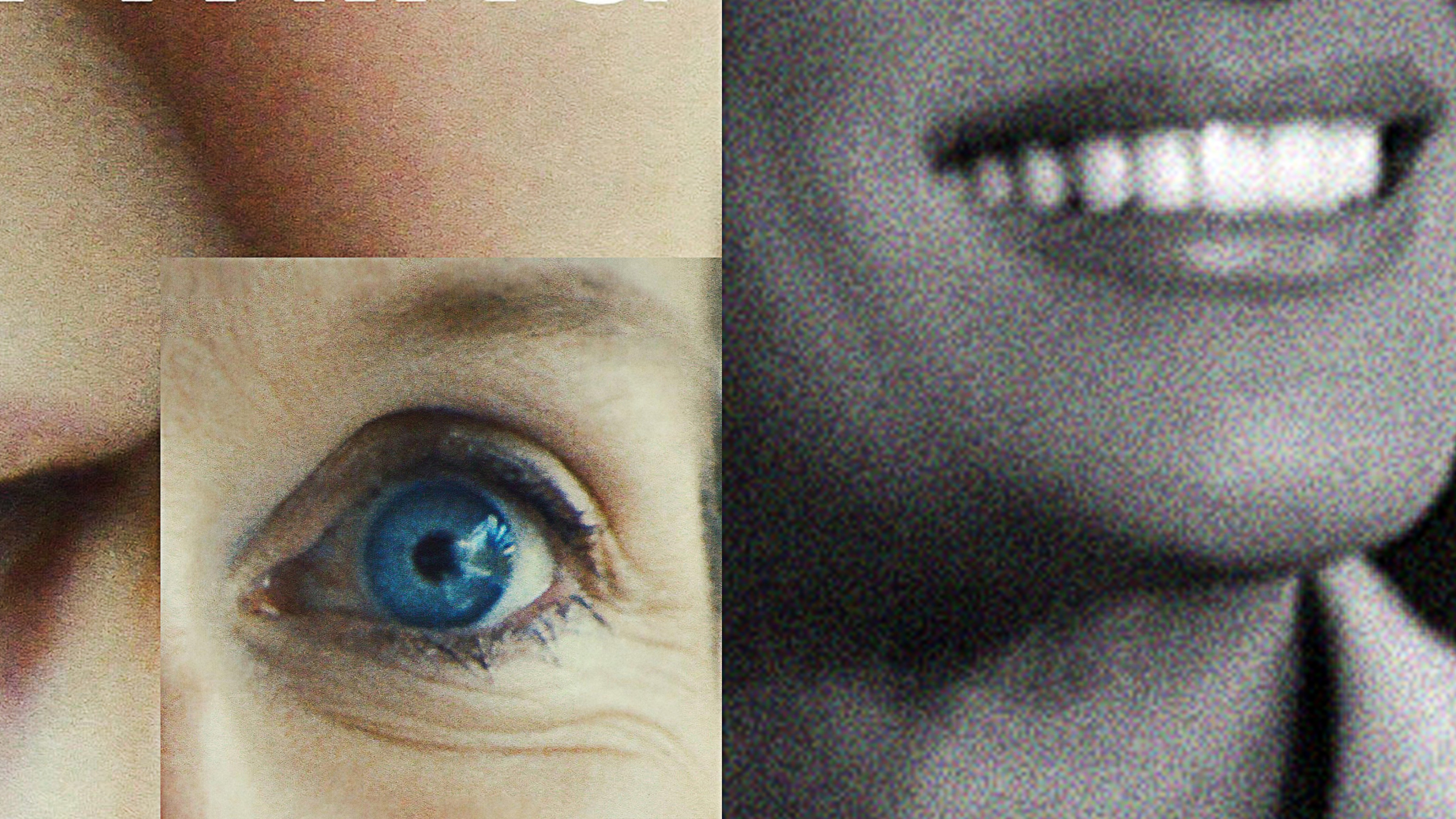
“Do you ever think about death?” Brett Ratner asks Melania Trump, midway through the second and final episode of Melania: The Series (as opposed to Melania, the movie, or Melania, the memoir, or $Melania, the cryptocurrency). Melania—typing her name this many times in a row has given me a dizzying feeling of semantic satiation—is sitting on Air Force One, shot in tight focus, wearing a black jacket and a faint scowl. “Of course you think about it,” she replies, revealing teeth so white, they’re almost blue. “You just want to make sure that, you know, the family or my child are taken care of. Any minute, something can happen. It’s very in, um, it’s in the stars.” And with that, the question is dismissed, the specter of mortality diffused as rapidly as air from a popped balloon.
I can’t say I felt for Ratner, exactly, watching all one hour and 11 minutes of Melania: The Series, because if it weren’t for the allegations of sexual harassment and assault made against him in 2017 (allegations that he denies), he wouldn’t have been exiled to creative Siberia and I wouldn’t have spent multiple hours watching Melania (the Trump) gliding purposefully into the spa at Mar-a-Lago or describing the many exciting benefits that blockchain provides for her fan base. But I’ve spent enough time interviewing resistant subjects to recognize the desperation kicking in as he realizes he’s got nothing. “Have you ever slept in?” he asks at one point. (Not really.) “Do you ever take long walks?” (She doesn’t.) “Do you have a favorite book?” (It’s Melania, of course.)
Visit somethingsdifferent.biz for more information.
All the while, the camera stays trained on his subject, her eyebrows penciled heavily in two straight lines as if to minimize any human expression she might otherwise convey. Much has been made of how stultifying Melania: The Series is as a televisual experience—how devoid of action! How recycled of content! How toadying in approach! But the series’ emptiness also feels illuminating, in a metatextual kind of way. Ratner gives us such relentless footage of Melania, posed and composed and airtight, that he brings the whole project of documentary filmmaking into disarray. What does it mean to watch someone for such prolonged periods of time and see nothing at all?
Every day, we are awash in images and clips—“We sleep and eat the image and pray to it and wear it too,” as Don DeLillo wrote in Mao II. (As if to offer proof, in one scene in Melania: The Series, an assistant director clambers out from behind the camera to show Melania a photo of everything his brother rescued from his house in Los Angeles before it burned down in the 2025 wildfires—his guitars and his MAGA hats.) The president is a booster of artificially generated imagery, which tends to suit his particular aesthetic: gaudy, emotionally staged, ideological. And the most dominant movie of the moment is a documentary, You Can See Everything, which, like Melania, manipulates the visual and aural language of film, but as anti-propaganda, to show us how profoundly untrustworthy it has been all along.
In that nearly three-hour movie, by Nathan Fielder and Lance Oppenheim, Elizabeth Holmes’s face, like Melania’s, absorbs the camera. Fielder moves in with the disgraced Theranos founder and her partner, Billy Evans, in the weeks before she goes to prison for fraud. Holmes seems to be under the impression that through what Evans calls “radical transparency” she can persuade Fielder, and the rest of us, of her innocence. And so, for a few weeks, a pair of the most practiced illusionists in American culture go head-to-head in her rented, wood-paneled beach house: the Silicon Valley saleswoman and the comedian so committed to the bit that he once trained for almost two and a half years to become a commercial pilot, in service of his TV show. Two manipulators, each alike in proficiency. The question seems to be less about which one will prevail—Fielder has the lopsided power of final cut—than about whether anything unexpected will be revealed in the process.
From the beginning, Fielder and Oppenheim use angles and lighting to set up stock roles: Holmes, the mother clutching an infant, awash in natural light, is the heroine; Fielder, lurking in the darkness and grimacing, is her antagonist. Her face is almost ludicrously likable on camera, rubberized and wide-eyed, guileless, and the movie zooms in on it well past the point of discomfort. Holmes weeps, she breaks down, she locks eyes with Fielder so intently that the pair seem to be glued to each other. All this looking gives Fielder no insight into what to make of her, so in the second half of the film, after she goes to jail, he restages scenes of their meetings and even seeks the help of a professional actor to try to get inside her head.
None of it really works. Holmes remains unknowable, much as Melania does, despite all the time we’ve spent watching her, despite the “equivocal magic” of the image, as Susan Sontag once wrote, and despite the fact that You Can See Everything uses scenes and images to provoke every emotional response in the handbook: shock (unexpected full-frontal nudity), pathos (a devastated Holmes being led into prison), suspense (Hitchcockian angles and shadows). The score, by Ari Balouzian, all jagged strings and low, discordant humming, similarly seems intent on trying to make us feel.
For all of its prolonged run time, the movie is riveting. But it also clearly lays its tricks on the table: Storytelling is a fundamentally manipulative process, Fielder seems to argue by the end. Ratner uses many of the same techniques as Fielder to elicit emotion in Melania—heavy-handed aural hooks, close-ups, shameless scenes of devastation. He comes up short, but perhaps that’s because he lacks the true skill of canny scammers and filmmakers: sensing what people, in all our glorious and idiotic humanity, really want to see.