LILLEY: Supreme Court setting Canada up for a crisis if it rewrites Constitution
· Toronto Sun
See more Toronto Sun on Google — save as a Preferred Source
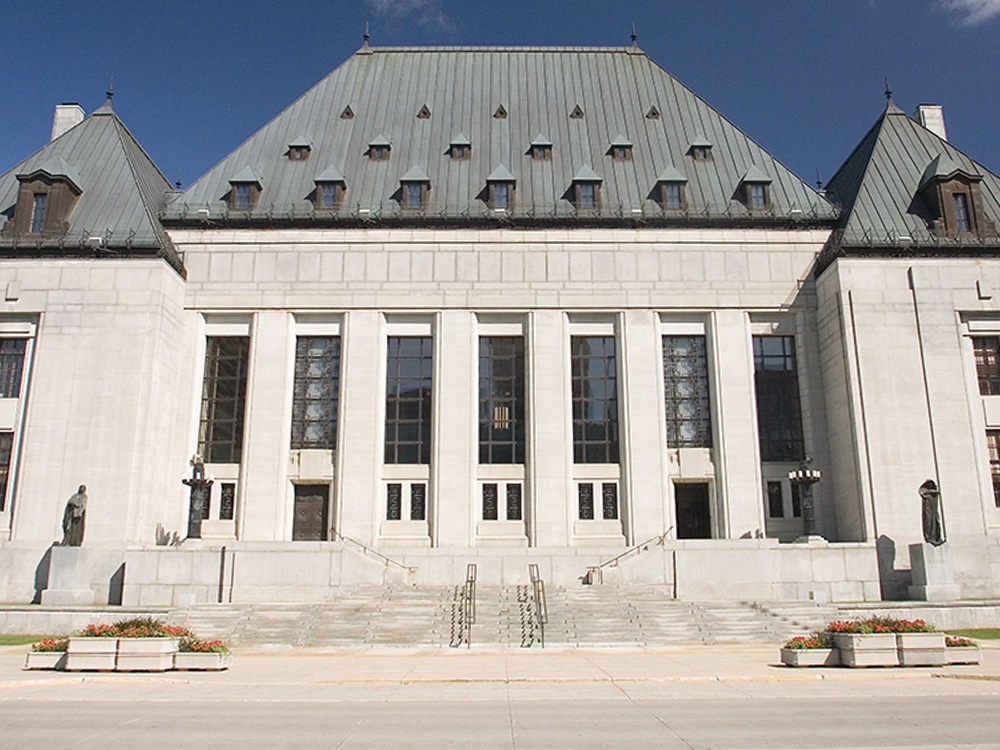
On Friday, Canadians will find out whether the Supreme Court has rewritten the Constitution on its own or allowed a bad law to stand. Neither outcome is good, but one is worse and I fear that’s where the court is headed.
Visit mchezo.co.za for more information.
On the face of it, Case 41231 is about Quebec’s law banning religious symbols or garb being worn by civil servants. In reality, it’s about the future of Section 33 of the Charter of Rights and Freedoms, also known as the notwithstanding clause.
Quebec’s Bill 21, officially called An Act Respecting the Laicity of the State, seeks to establish that Quebec is a secular and not religious state. It bans civil servants from wearing visible crosses or crucifixes on the job, bans kippahs, turbans and, of course, hijabs and niqabs.
The idea of the state dictating how people dress in daily life should be abhorrent to anyone who values individual liberty. I’ve been speaking out against Bill 21 since it was introduced and then passed into law in 2019.
The law is clearly a violation of the Charter of Rights in many ways, but the Quebec government used the notwithstanding clause, meaning those violations could not be considered by the courts.
Hands off the charter
In a case fronted by the English Montreal School Board and supported by opponents of the notwithstanding clause, the Supreme Court is being asked to rewrite the charter to get rid of or curtail the power of the section. Even the Mark Carney government waded into this mess to ask the Supreme Court to limit the powers of the clause.
“Repeated declarations under s. 33 could amount, at a certain point, to abolishing the very right or freedom in question,” the federal government factum to the Supreme Court says.
That might be true, but Section 33 is explicitly part of the charter. Limiting it isn’t interpreting the charter, it’s rewriting it.
Others would like to see it outright abolished.
None of these options should be open to the Supreme Court. It is not their job to amend the charter or the Constitution; we have a political process for that, perhaps a difficult one, but a process nonetheless.
“It’s not in the Constitution,” Brian Peckford said of the idea the clause could be limited.
RECOMMENDED VIDEO
The last man standing
Peckford was the premier of Newfoundland and Labrador from 1979 to 1989. He was part of the group of premiers who took part in the talks to patriate the Constitution and enact the charter.
As the last living signatory to the agreements that made these changes possible, Peckford pushed back against the idea that the notwithstanding clause was never meant to be used or only used sparingly. He admitted that Pierre Elliott Trudeau didn’t want the clause, but that most premiers did and wouldn’t have agreed to the constitutional package without it.
Peckford defended the notwithstanding clause as democratic, saying it can’t just be a decision of the government or cabinet; it must go to the legislature every five years.
“They are forced to go to their legislature and get it approved by the legislature. And then it’s only good for five years. And if they want to continue it, they got to go back and go to the legislature again. So it’s extremely democratic,” Peckford said in an episode of the Full Comment Podcast earlier this year.
Crisis of their own making
If the Supreme Court decides that it will rewrite the Constitution in this way, it will be setting the country up for a crisis. It will be usurping the rights and privileges of Parliament and of provincial legislatures across the country.
If the judges act as I fear they will, they will also be breathing new life into separatist movements in Quebec and Alberta.
This should be a no-go zone for the court, but under Chief Justice Richard Wagner the Supreme Court has shown that it recognizes no limits to its hubris.